Is SaaS Actually Dying? Here Is What I Think
Everyone is saying SaaS is dead. I have been building software for years and I am not convinced — but I do think something big is shifting.
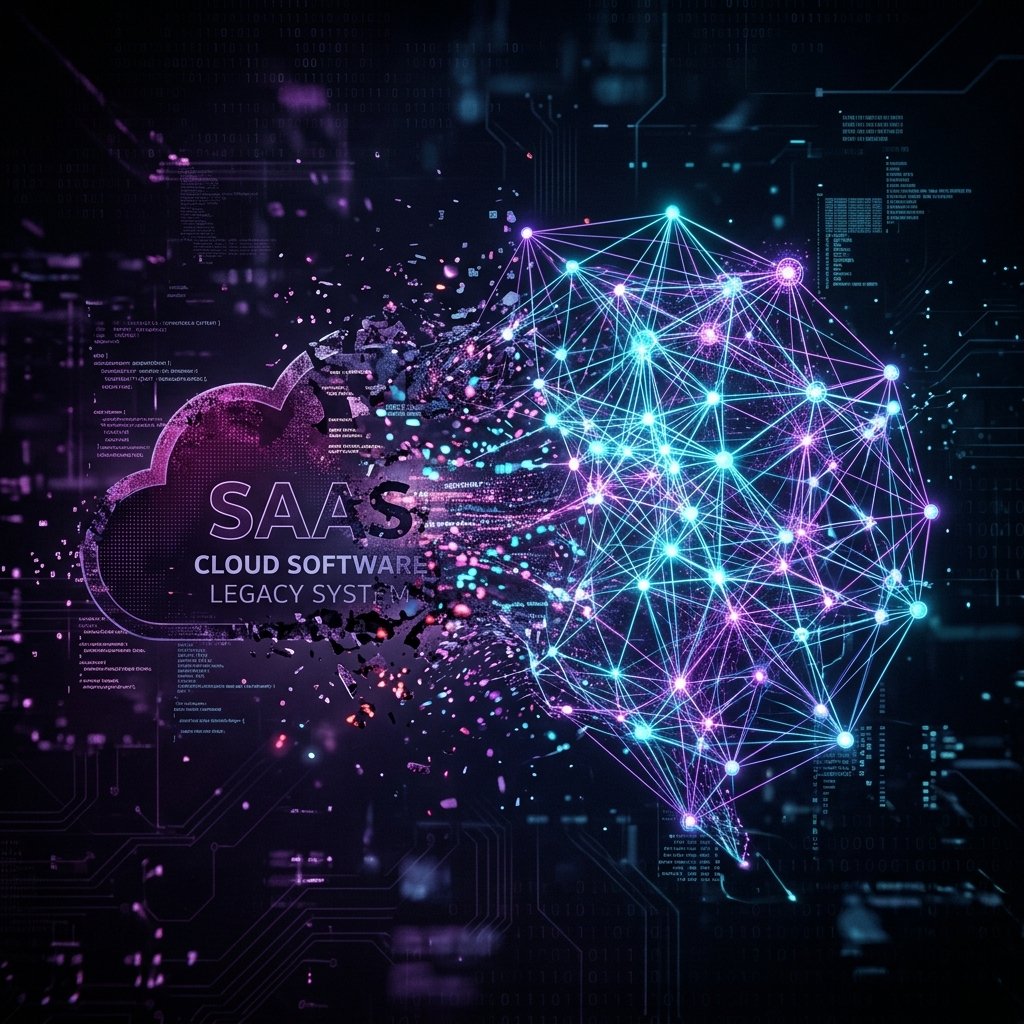
I Keep Hearing That SaaS Is Dead
Honestly, I rolled my eyes the first few times I saw the headline. "SaaS is dying." "AI agents will replace all software." Every other newsletter, every LinkedIn post. It started feeling like the same energy as "blockchain will disrupt everything" back in 2018.
But then I actually sat down and thought about it for a while. And I think the people saying it are half-right — which, weirdly, is more unsettling than if they were completely wrong.
What Actually Made SaaS Work
The SaaS model is brilliant in its simplicity. Build something once. Host it. Charge people monthly. The product is the same for everyone, and that sameness is the whole point — it keeps costs manageable, support predictable, and growth linear.
I have built parts of SaaS products. I know the thinking that goes into every feature decision: if we build this for one customer, can it work for a hundred? If not, it probably does not make the roadmap. That constraint shapes everything.
The limitation — the thing nobody really advertises — is that every SaaS user eventually hits the ceiling of what the product allows. You want a workflow that works slightly differently. A report that shows different numbers. A permission level that does not exist. And the answer is always "put it on the roadmap" or "use our API."
Where AI Agents Actually Change Things
Here is the part I could not dismiss. When I started using AI tools seriously in my own work, I noticed I was reaching for SaaS less often for certain tasks.
Not for everything. Not even for most things. But for specific, narrow problems, I found myself just... describing what I wanted and getting something useful back. No onboarding. No 14-day trial. No "upgrade to Pro to unlock this feature."
That friction removal is real. And it matters more than people admit.
I think what is genuinely shifting is not that software is dying — it is that the gap between "I need something custom" and "I can afford something custom" is closing. Small companies and solo builders who used to accept whatever the SaaS gave them now have more options. That is a legitimate change.
But SaaS Is Not Going Anywhere
Let me push back on my own point a little.
The tools I stopped using to AI were almost always simple, narrow ones. The ones I still pay for every month — the serious infrastructure, the ones embedded in team workflows, the ones with years of my data inside them — those feel completely different. Nobody is describing their way out of a properly integrated CRM or an accounting platform.
There is also the question of trust. I might ask an AI to draft something for me. I am not going to ask it to own a business-critical process and walk away. Not yet.
I think the SaaS products that are genuinely at risk are the ones that were always a bit thin — a single feature wrapped in a subscription. Those made sense when building software was expensive. If that cost goes to near zero, the business model gets hard to defend.
What I Am Actually Taking From This
I have been thinking about this a lot as someone who builds product. The conclusion I keep landing on is pretty simple:
The value of software was never really in the code. It was in the problem it solved and how reliably it solved it. Code that works predictably, that your team trusts, that has your data in it — that still matters. A lot.
What changes is how you get there. And that is worth paying attention to.
I do not think SaaS is dead. I think some of it is going to get replaced, some of it is going to get much better by absorbing AI, and some of it will keep chugging along because the switching cost is too high for anyone to bother.
Mostly I think people love a clean narrative. The truth is messier and more interesting.
Ashraful Islam Tushin
Product Engineer
I don't just write code. I design, ship, and scale digital products from roadmap to release.